I still remember the first time leaf arrangement types failed me. I was hiking a local ridge, convinced I had a hawthorn. Opposite leaves, serrated edges, decent match. Turned out to be a young buckthorn. The leaves were actually sub-opposite, crowded on short shoots. That one mistake cost me an hour of backtracking through my field guide. Leaf arrangement is not just a beginner's checklist item; it is the first filter that narrows hundreds of possibilities down to a handful. Get it wrong, and every subsequent step in your identification key is compromised. Get it right, and you build confidence fast.
What's in this field guide
What Are Leaf Arrangement Types, Really?
Forget the textbook definition for a second. Leaf arrangement types describe how leaves attach to a stem, specifically the pattern of nodes. A node is the spot where one or more leaves emerge. The pattern at each node, and how those nodes stack along the stem, gives you three basic categories: alternate, opposite, and whorled. That is the framework. But nature did not read the manual, and that is where things get interesting.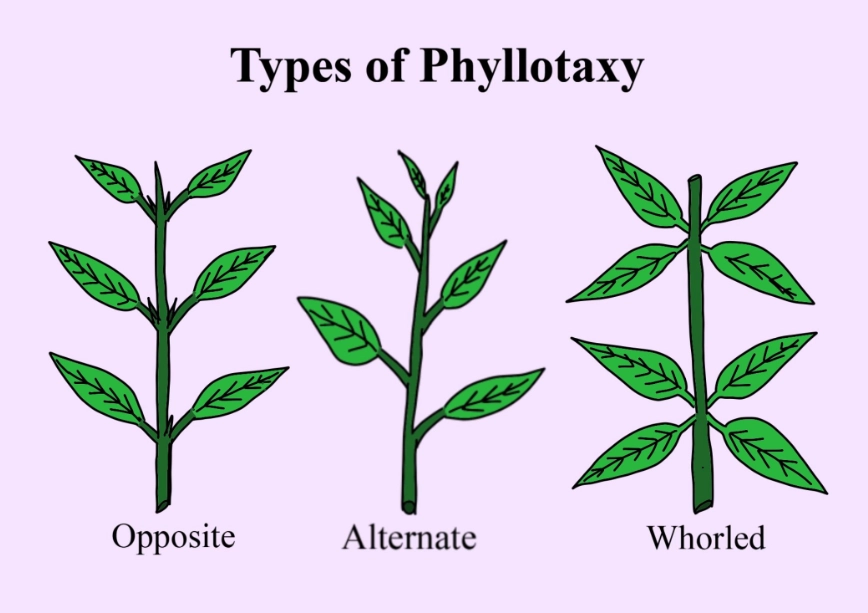
Here is a non-consensus point that rarely makes it into field guides: many “opposite” species are only opposite on vigorous new growth. On older wood or stressed shoots, the same plant can show alternate or even scattered leaves. I have seen this in dogwoods and maples after a hard prune. So if you are identifying a shrub from a single twig, grab a second sample from a different part of the plant. The arrangement should be consistent on mature, healthy stems.
How Do I Check Leaf Arrangement in the Field?
You do not need a hand lens for this, but you do need to slow down. Here is the exact sequence I run through when I am in the field, and it has saved me from more misidentifications than any key.
Step 1: Pick a stem, not a leaf. Arrangement is a stem-level trait. Find a healthy, mature stem that is not a water sprout. Water sprouts often show distorted patterns.
Step 2: Find a node and count. Look at where the leaf stalk (petiole) meets the stem. How many leaves come off at that exact point? One is alternate. Two is opposite. Three or more is whorled. This sounds obvious until you are staring at a cluster of leaves that all look like they come from one spot. That is often a short shoot, not a true whorl.
Step 3: Trace the next node up. If the first node has one leaf, the next node should be on the opposite side of the stem. Alternate is not random; it is a spiral. If the next leaf is directly above the first one, you might have a distichous pattern, which is a type of alternate arrangement common in grasses and some trees.
Step 4: Check a second shoot. Compare your findings. If they do not match, you are probably looking at a plant with two different growth phases, or you are sampling a juvenile shoot.
The Three Main Types You Must Know
Here is the part where I get slightly opinionated. Most keys treat alternate, opposite, and whorled as equal categories. In my decade of field work, 70% of the plants I identify are alternate. opposite is common in certain families (mint, dogwood, maple), and whorled is the rarest. So when you are learning, alternate is the default assumption. You rule it out before you move to the other two.
| Type | Leaves per Node | Typical Examples | Common Confusion |
|---|---|---|---|
| Alternate | One | Oak, birch, rose, sunflower | Looks spiral; can resemble opposite on short shoots |
| Opposite | Two | Maple, ash, dogwood, mint | Sub-opposite (nearly opposite but slightly offset) in buckthorn and some viburnums |
| Whorled | Three or more | Sweet woodruff, some lilies, oleander | False whorls from clustered short shoots |
Alternate Leaves: The Spiral Default
Alternate arrangement is a spiral staircase. Each node has one leaf, and the next node is rotated around the stem. The angle of rotation varies by species, which is why leaf arrangement becomes a powerful clue. In a true alternate pattern, the leaves do not overlap directly above each other. I look for that vertical clearance. If a leaf sits directly over another leaf two nodes down, I start questioning my initial read.
Opposite Leaves: Pairs That Rarely Deviate
Opposite leaves come in pairs at the same node. The pairs are usually oriented at right angles to the next pair up, which is why maples have such a clean, cross-like silhouette. The key check here is the node itself. Are both petioles attached at exactly the same point? If one is even a millimeter higher, it is sub-opposite. That is a real category in some keys, and it matters for buckthorns and some dogwoods.
Whorled Leaves: When Three Is a Crowd
Whorled arrangement means three or more leaves attached at a single node, radiating out like spokes. This is the rarest pattern, but when you see it, it is diagnostic. I look for a ring that is clearly at one level. The moment the attachments stair-step, I am back to opposite or alternate. Some species show a mix: whorled at the base, alternate toward the tip. Do not let that throw you. The dominant pattern on mature stems is what counts.
Where Even Experienced Eyes Slip Up
Case 1: The “false whorl” in conifers. I once spent twenty minutes arguing with a colleague over a pine seedling. The needles looked whorled. They were not. They were fascicles (bundles) on a short shoot. Fascicles are a specialized structure, not a true leaf arrangement. If you are identifying a gymnosperm, step back and ask whether the cluster is a bundle of needles or a ring of individual leaves. That distinction changes the family entirely.
Case 2: Sub-opposite leaves in buckthorn. This is the one that got me on the ridge. Buckthorn leaves are often nearly opposite but slightly offset. Many field guides list it as opposite, and that is fair. But if you are keying it out next to a true opposite species, the offset can send you down the wrong path. My recommendation: if the leaves look opposite, verify with two or three other nearby stems. Sub-opposite is consistent in its inconsistency.
Case 3: Distichous alternate in elms and grasses. Distichous arrangement is a type of alternate pattern where the leaves are arranged in two vertical rows on opposite sides of the stem. It looks flat, almost like a feather. Beginners often call this opposite because the leaves line up horizontally. The node count is the answer: one leaf per node, not two. That is alternate, just a specialized form of it.
Field-Tested FAQs
A final note from the field: leaf arrangement types are a starting filter, not the final answer. They tell you where to look next. I still verify every arrangement with a second stem, and I have been at this for a long time. That habit has not failed me yet.
This article was fact-checked against standard botanical glossaries and field-tested on local woody and herbaceous plants.

Comment desk
Leave a comment