I spent my first three years misidentifying every woodland fern as a lady fern. The problem wasn’t my guidebook. It was me. I kept looking at the overall frond shape and ignoring the one feature that actually separates species: the sori. Real fern identification lives and dies on those little brown dots, not the leaf outline.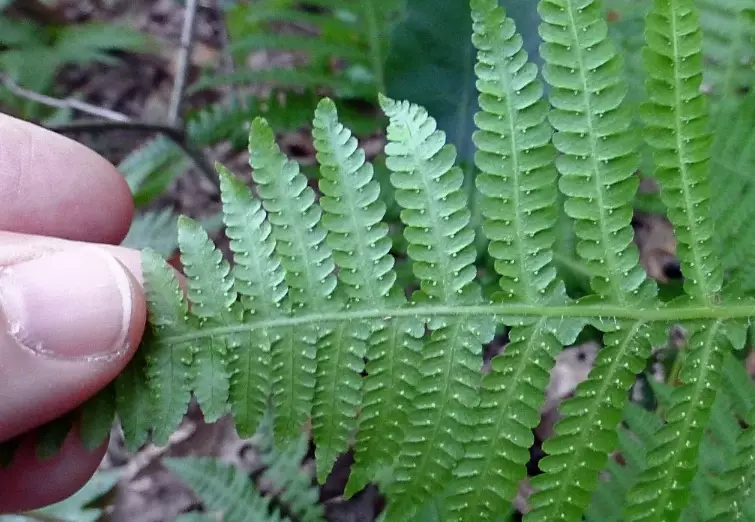
What I Cover Here (Skip to What You Need)
The Sori Test: Your First Real Filter
Flip the frond over. Before you look at anything else, find the sori. Their arrangement—not just their presence—cuts your possibilities fast.
I carry a 10x hand lens in my pocket. Cheap, plastic, weighs nothing. In a dim forest, it’s the difference between “maybe a wood fern” and “definitely a marginal wood fern.” The lens shows you indusium shape—the tiny flap that covers the sporangia. Is it kidney-shaped? J-shaped? Missing entirely?
Here’s a detail most guides bury: sori position tells you about blade dissection. If sori sit right on the margin (edge) of the pinna, you’re likely looking at a Polystichum or a Dryopteris with marginal sori. If they’re tucked under a rolled edge, that’s a different story—think Pteridium (bracken), where the margin folds over to protect the sporangia. That fold is called a false indusium. Newcomers miss it because it looks like a curled leaf edge, not a reproductive structure.
One more sori checkpoint: maturity. Immature sori look green and tight. Mature ones turn brown and fuzzy. If you’re keying out a fern in early summer, you might be staring at unopened sori that haven’t developed the diagnostic shape yet. I revisit the same patch two weeks later if something feels off. Patience beats a wrong ID.
How to Read Frond Architecture (Beyond the Silhouette)
Staring at the entire frond outline is the amateur move. The pros look at pinna arrangement and the stipe (the stalk).
Take a lady fern (Athyrium filix-femina). Its pinnae are deeply lobed, almost to the midrib. But so are some wood ferns. The separator? Stipe scales. Lady fern has pale, almost translucent scales near the base. Many Dryopteris species have dark brown, sometimes blackish scales. I’ve seen people overlook this because they photograph the frond top on a phone. The stipe is where the truth lives.
Does the stipe have a groove? Is it channeled on one side? That groove—called a sulcus—is a real character for distinguishing male fern (Dryopteris filix-mas) from similar species. Run your finger up the stipe. If you feel a smooth channel, combined with brown scales, you’re narrowing the field.
Another field trick: count the pinna pairs. Not the whole frond—just one side, mid-frond. This mirrors how you’d count ray flowers on an aster. Lady fern typically has 20–35 pairs per side. Male fern sits in a similar range, so counting alone won’t separate them, but it rules out species with far fewer pinnae (like some Polypodium with 10–15 pairs).
Three Field Mistakes I See Every Weekend
Mistake 1: Ignoring the Rhizome
If you can see the rhizome without digging, look at it. Is it creeping horizontally along the soil? That points toward Polypodium or Pteridium. Is it upright and stout, like a small crown? Then you’re in Dryopteris or Polystichum territory. I’ve watched people tug gently on a frond to feel if it pulls from a clump or a runner. Gentle tug—don’t uproot anything.
Mistake 2: Trusting One Frond
Ferns are variable. A single young frond can look nothing like a mature one on the same plant. I always examine at least three fronds, one from the center of the crown and two from the sides. The sori on the central fronds are usually the most mature and diagnostic.
Mistake 3: Forgetting the Habitat Clues
Did you find it in a seep? On a limestone outcrop? Under beech? Habitat narrows the list before you even touch the frond. On a recent walk in the Catskills, I found a fern growing directly on a mossy boulder beside a waterfall. The frond was narrow and the sori sat near the margin. That’s a Polystichum signature—specifically, a marginal wood fern. The rock context was half the answer.
Quick Comparison: Five Common Confusing Ferns
| Species | Sori Shape & Position | Stipe Scales | Habitat Clue |
|---|---|---|---|
| Lady Fern (Athyrium filix-femina) | J-shaped, curved along veins | Pale, translucent | Moist woods, stream banks |
| Male Fern (Dryopteris filix-mas) | Kidney-shaped, in two rows | Brown, dark at base | Rich woods, shaded banks |
| Marginal Wood Fern (Dryopteris marginalis) | Round, right on margin | Brown, dense | Rocky slopes, boulders |
| Christmas Fern (Polystichum acrostichoides) | Round, in rows, on upper pinnae only | Brown, hair-like | Upland woods, evergreen |
| Bracken (Pteridium aquilinum) | Marginal, under rolled edge (false indusium) | Sparse, brownish | Open fields, disturbed soil |
Notice the Christmas fern row. Its sori only appear on the upper pinnae—the lower pinnae don’t produce spores. That single trait separates it from most lookalikes. I’ve seen people miss it because they flip over the bottom pinnae first, find nothing, and conclude the fern has no sori.
Field Questions I Get Asked Most
What if my fern has no sori at all—can I still identify it?
Yes, but you’ll rely on vegetative characters: stipe scale color, frond texture, and habitat. Some ferns (like the walking fern) rarely produce sori. Look at the leaf tip: does it root at the tip? That’s a clincher for Asplenium rhizophyllum. Otherwise, aim to revisit in late summer when sori mature.
Are sori always brown? Mine look green and powdery.
Green powdery sori mean you’re looking at immature sporangia. They haven’t turned brown yet. Don’t force an ID. Instead, note the shape of the indusium—even green, a kidney-shaped flap points to Dryopteris, while a J-shaped flap points to Athyrium.
I see two ferns with identical fronds. One has sori near the edge, one has them in the middle. What’s going on?
That’s your split. Marginal sori strongly suggest Dryopteris marginalis or a Polystichum. Sori in the middle of the pinna—between midrib and margin—point toward Dryopteris filix-mas or Athyrium. Take a photo of both sides of the frond. The side with sori is the one your guidebook keys on.
For deeper sori morphology, the American Fern Society’s online glossary is the most reliable reference I’ve found. Their diagrams of indusium types are worth printing and carrying.
Last thing: I verify every ID with a spore print if I’m unsure. Place a mature frond on white paper overnight. The spore color—yellowish, brown, or black—is a final confirmation that no field guide photo can fake. This article was fact-checked against regional fern keys and field observations.
Comment desk
Leave a comment